How to build the ultimate coastal day around two wheels and one board — from the break at first light to the golden hour on two wheels.
There is a specific kind of day that beach town regulars talk about in hushed, reverent tones. It starts before most people are awake. It ends with burning legs, a salt-crusted face, and a satisfaction that no city experience can replicate. It is the surf-at-dawn, ride-at-sunset day — and once you've had one, everything else feels like a warm-up.
This itinerary is built around the reality that a beach e-bike unlocks a dimension of coastal exploration that's simply not available on foot or in a car. You'll cover ground, discover spots, and arrive at each stop feeling present rather than rushed.
Before You Go: What You Need
- Your surfboard (or rent one locally — most good surf towns have dawn patrol boards available)
- A beach cruiser e-bike — ideally with a cargo rack or front basket to carry gear
- A dry bag or pannier for your phone, keys, and post-surf snacks
- Sunscreen applied before you leave the accommodation — not after you hit the sun
- A lightweight lock — beach towns are generally safe, but habits matter
- A charged battery (full charge the night before — this day deserves full range)
5:30 AM — Pre-Dawn Checkout
The alarm goes off in the dark. This is the bargain you made with yourself the night before, and it's worth it. Grab your board, your bag, and your bike. The streets are yours. There's something specific about riding a coastal town before the world wakes up — the air is cooler, the boardwalk is empty, and the sound of waves carries from blocks away.
Ride to the beach access point of your choice. If you're in an unfamiliar town, look for the spots where a few other early risers are already moving — they know the break.
E-Bike Advantage: Most surf spots worth waking up for aren't at the main beach access. They're down a coastal road, around a point, or past a parking lot that fills up by 7am. Your e-bike gets you there in five minutes. A car takes twenty once you factor in parking.
6:00 AM — Dawn Patrol
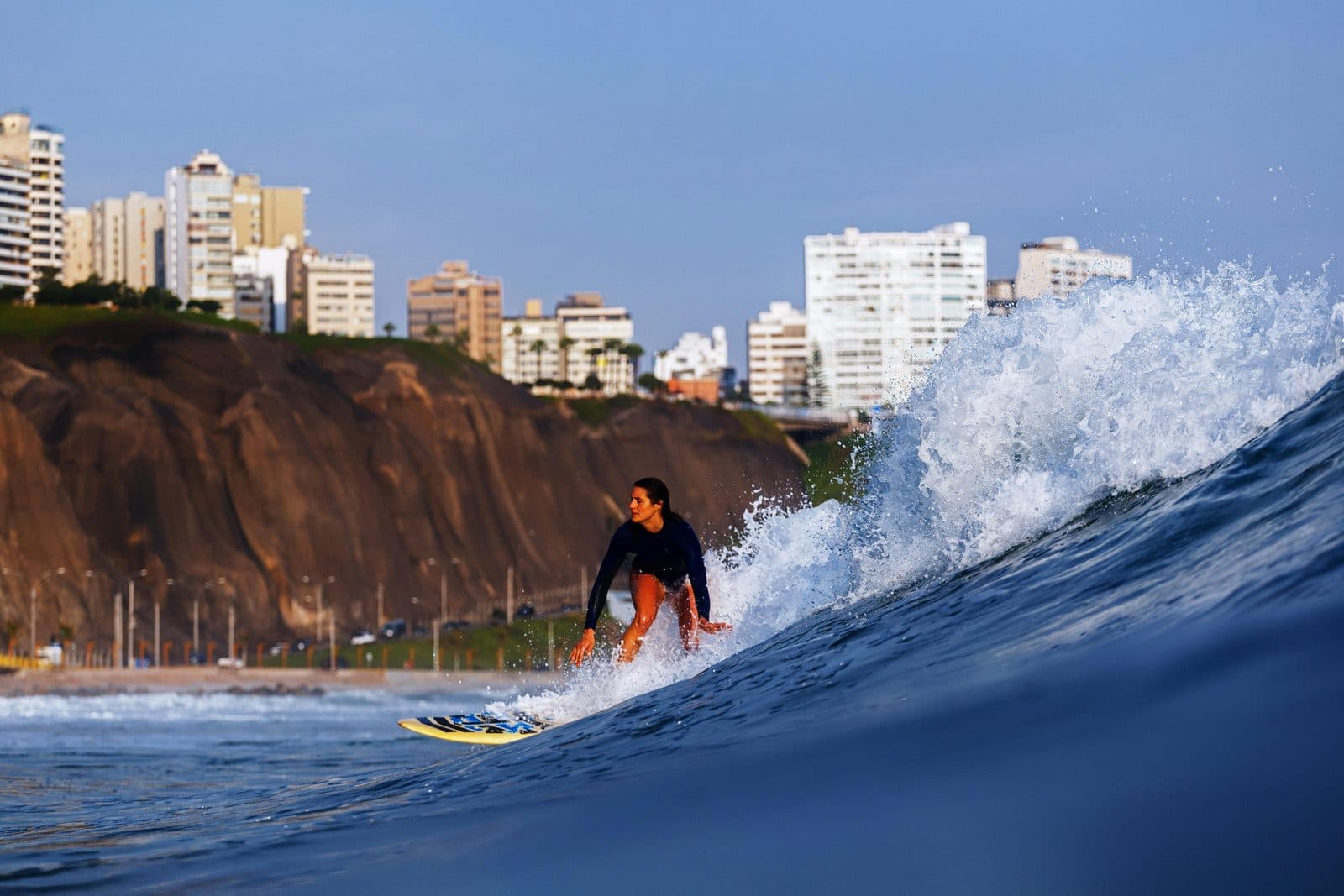
The first hour in the water at dawn is different from every other surf session. The light is low and gold. The crowd is absent or at a minimum. The wave faces are clean from overnight offshore winds before the afternoon sea breeze builds chop.
Lock your bike above the tide line. Most coastal towns have racks at beach access points; if yours doesn't, a bench or a fence post near the entrance works. Keep your lock cable short and your bag visible from the water so you can keep an eye on it between sets.
Surf until the sun is fully up — usually about 90 minutes of peak conditions before the crowd arrives. This is your uninterrupted window.
7:30 AM — The Post-Surf Breakfast Mission
Salt water does something to appetite that nothing else replicates. You're hungry in a way that feels earned. This is where the bike earns its place in the day — instead of shuffling back to your car and driving somewhere, you towel off, strap your board to your cargo rack (or lean it against a cafe wall), and ride.
Beach towns worth visiting have at least one spot that knows the pre-9am crowd: surfers, early walkers, and fishermen who've been up since 4. It serves large coffees, egg sandwiches or breakfast burritos, and doesn't play music yet. Find it. It will be a block or two off the main drag.
Sit outside. Let the sun dry your wetsuit. Order a second coffee. This hour is not negotiable.
9:00 AM — The Morning Exploration Loop
By 9am, the beach town is waking up, but the tourist crush hasn't started yet. This is your window to explore on the bike before the streets and paths get congested.
Plan a 10–15 mile loop that takes you through:
- The main coastal road or highway adjacent to the beach — usually has great ocean views
- Any inlet, estuary, or bay on the back side of town — completely different ecosystem, often stunning
- A neighborhood or area you've never visited — beach towns always have a locals-only residential stretch that visitors miss
- A high point if there is one — a bluff, a headland, or a dune overlook for the morning view
On a beach cruiser e-bike, 15 miles takes about 60–75 minutes with stops. Keep the assist level moderate — save battery for the evening ride.
11:00 AM — The Beach Base
Return to the beach as the morning crowd arrives. By now, the waves have either cleaned up for mid-morning sessions or built into afternoon slop — either way, a couple of hours in the water or along the waterfront is the right call.
Lock your bike up, set up your spot, and do beach things: swim, read, watch the ocean, talk to strangers. This is the unhurried middle of the day that the morning earned you.
1:00 PM — Lunch Off the Beaten Path
The best lunch spots in beach towns are never at the beach. They're two streets inland, have handwritten signs, and are frequented by the people who live there year-round. Your bike makes this accessible.
Leave the board locked up and ride inland. Look for:
- Fish tacos at a counter-service spot with plastic chairs outside
- A Vietnamese or Mexican joint that somehow exists in a tiny beach town and is always packed
- A farmers market if it's the right day of the week — most coastal towns run one mid-week
Ride back to the beach after. This back-and-forth mobility is what the e-bike is made for. No parking pressure. No five-minute walk each way.
3:00 PM — Afternoon Recharge
This is when experienced beach-day people nap, read, or simply sit still. The afternoon sun is at its most intense, the beaches are at their most crowded, and the wind has typically built enough to make the water choppy.
Use this time to charge your phone, re-apply sunscreen, and — if your accommodation allows — plug in your e-bike. Most 52V systems charge from depleted to 80% in about 2–3 hours, so a 3pm plug-in means a full battery for the sunset ride.
5:30 PM — The Golden Hour Ride
This is the reason for the whole day. The crowd starts thinning around 4:30. By 5:30, the boardwalk and coastal paths have reclaimed their atmosphere. The light is heading toward gold. The temperature drops just enough to make riding effortless.
Plan a longer loop for the evening — 15–25 miles if your battery allows. The goal isn't exercise. It's being present and moving through the best light of the day.
Recommended golden hour route elements:
- Ride south along the coastal path until you hit something worth stopping for — a view, a lighthouse, a jetty
- Double back north and ride past your starting point toward a second destination — a pier, a seaside bar, a fish-and-chips stand you spotted in the morning
- Time your furthest point to coincide with sunset. Stop. Watch it.
- Ride back in the dusk. Use your lights. Take it slow.
7:30 PM — Dinner with Earned Appetite
You surfed at dawn. You rode 30+ miles. You watched the sun go down from the back of a bike on a coastal path. You have earned dinner in the fullest possible sense.
Beach towns do seafood well, and dinner after a full coastal day has a different quality — everything tastes better when your body has actually done something. Go somewhere with a patio. Order the local catch. Get a beer or a mocktail. Don't rush.
The Gear That Makes This Day Work
This itinerary only works as described if your bike is genuinely up to the task. A 36V beach cruiser with a narrow tire will run out of steam on the morning loop and leave you stranded on the return. A proper 52V fat tire beach cruiser will make every segment of this day feel effortless.
The Murf Electric Bikes lineup — particularly the Alpha ST and the Gigi — are built for exactly this kind of day. Fat tires for the boardwalk and beach access paths, 52V batteries for all-day range, and a cruiser geometry that keeps your back happy through 30+ miles. Worth a look at murfelectricbikes.com before your next coastal trip.
Replicate This Anywhere: This itinerary works in Santa Cruz, Myrtle Beach, Cannon Beach, the Florida Keys, the Outer Banks, Cape Cod, or Malibu. The specifics change. The structure holds.